
How Good Signage Helps Landlords Reduce Tenant Complaints and Protect Property Value

If you manage a rental property — whether it’s a small apartment building, a duplex, or a multi-unit complex — you’ve probably dealt with the same handful of recurring headaches: tenants who can’t direct their guests to the right unit, delivery drivers buzzing the wrong apartment, and maintenance workers wasting time looking for utility rooms. These small frustrations add up, and most of them trace back to one overlooked detail: the signs on your doors and walls.
Signage isn’t something most landlords think about until there’s a problem. But once you see how much of your day-to-day friction comes from unclear labeling, it’s hard to ignore.

The Delivery Driver Test
Here’s a quick way to evaluate your building’s signage: imagine a delivery driver pulling up for the first time. Can they find Unit 4B without calling the tenant? Can they tell the difference between the main entrance and the service door? Is the mailbox area clearly labeled?
If the answer is no to any of these, your tenants are fielding unnecessary calls and texts — and associating that frustration with your property. In a competitive rental market, those small annoyances influence renewal decisions more than most landlords realize.
Clear unit numbers, visible building addresses, and simple directional signs at entry points solve the majority of these issues. It’s one of the cheapest per-unit improvements a landlord can make, and it pays off every single day.
What Tenants Notice (Even When They Don’t Say It)
Tenants rarely complain about signage directly. But they do notice when a building feels well-maintained versus neglected. Faded, peeling, or mismatched door numbers send a message — and it’s not a good one. They signal deferred maintenance, which makes tenants wonder what else is being overlooked.
On the flip side, clean and consistent signage throughout a building creates an impression of care and professionalism. It tells tenants and prospective renters that the property is actively managed. For landlords showing units to prospective tenants, that first impression during a walkthrough matters enormously.
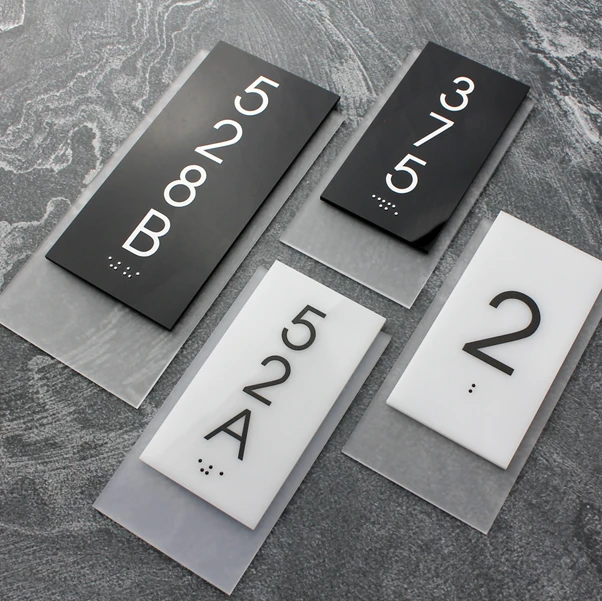
This doesn’t require a major investment. Replacing worn-out door numbers with a matching set of durable signs across the building is a straightforward weekend project. Suppliers like Bsign Store offer signage in wood, stainless steel, and acrylic that holds up to daily wear — the kind of materials that still look sharp years after installation, unlike the peel-and-stick numbers from the hardware store that curl at the edges after one summer.
Practical Signage Priorities for Rental Properties
Not every building needs a full wayfinding system. For most small and mid-size rental properties, a few key signage decisions cover the essentials:
- Unit numbers on every door. This sounds obvious, but it’s surprising how many buildings have missing or inconsistent door numbers. A matching set across all units looks professional and eliminates confusion for guests, deliveries, and emergency responders.
- Building address visible from the street. Emergency services, rideshare drivers, and visitors all need to identify the building quickly. Faded or undersized address numbers are a safety issue as much as a convenience issue.
- Common area labels. Laundry rooms, storage areas, trash/recycling rooms, and parking — a simple sign on each door prevents tenants from opening the wrong one and reduces the number of “where is the…” texts you receive.
- Mailbox identification. Clearly labeled mailboxes reduce misdelivered mail and the tenant complaints that follow. If your building has a shared mailbox bank, consistent labeling is essential.
A Note on Durability
Landlords know better than anyone that cheap fixes cost more in the long run. Door signs that fade, crack, or fall off within a year mean you’re buying replacements and spending time on a problem you thought you’d already solved.
Materials matter here. Wood, stainless steel, and acrylic signs are significantly more durable than printed plastic or adhesive vinyl. They resist UV fading, handle cleaning without damage, and maintain their appearance through tenant turnovers. For a landlord, that means installing signage once and not thinking about it again for years.
Small Fix, Big Payoff
Good signage won’t transform a property overnight. But it’s the kind of detail that quietly improves the tenant experience, reduces day-to-day management friction, and makes a building look more professional to prospective renters. For the cost involved — usually less than a single service call — it’s one of the highest-return maintenance upgrades a landlord can make.








 Accessibility