
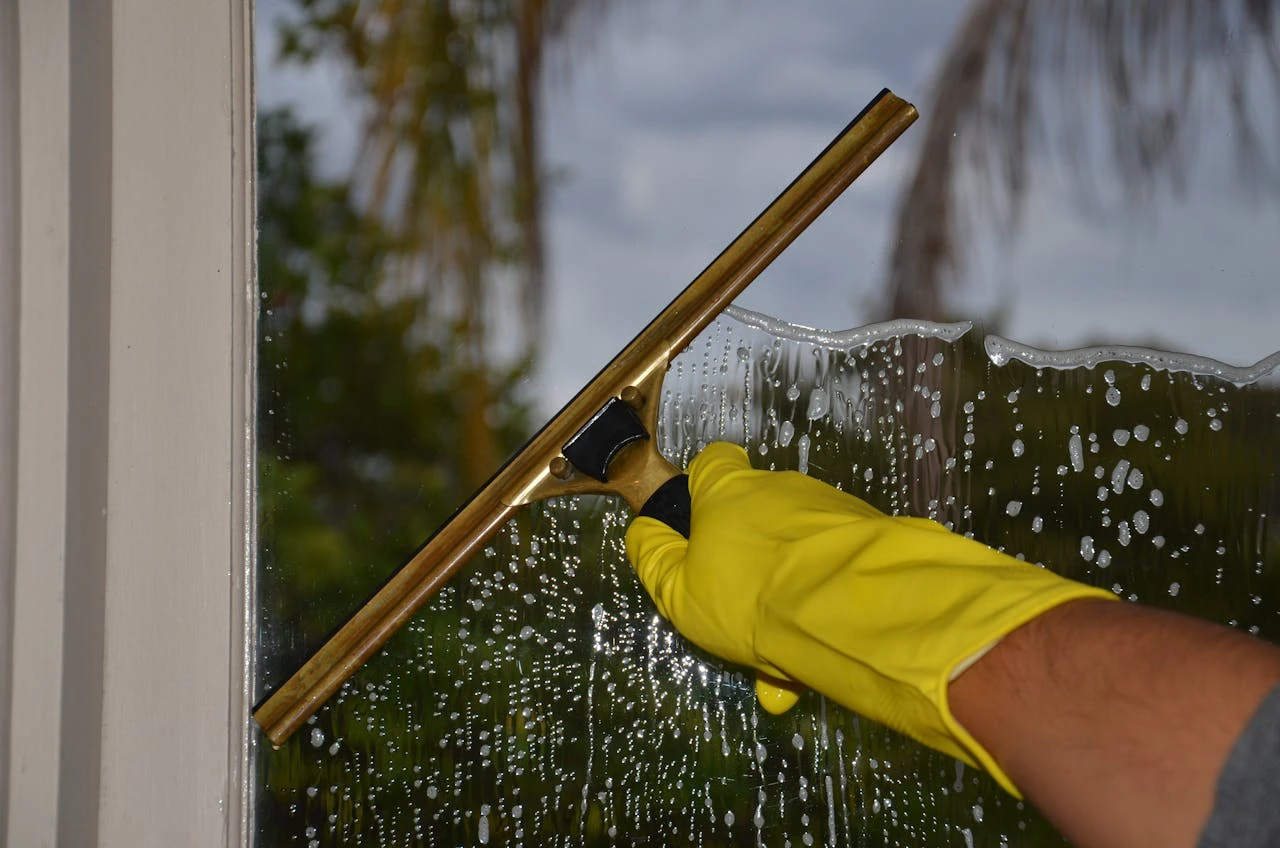
Does Window Cleaning Actually Increase Rental Property Value?

The short answer is yes — but not in the way most landlords think. Window cleaning does not add a fixed dollar amount to an appraisal. What it does is remove a visible signal of neglect that costs landlords prospective tenants, faster lease signings, and stronger negotiating position on rent. In a rental market where vacancy is rising and tenant turnover averages $1,750 to $3,872 per unit, clean windows are a retention and leasing tool as much as a maintenance task.
Why Landlords Keep Asking This Question
If you manage rental properties, you already know the pressure. According to industry data, the average cost of tenant turnover runs between $1,750 and $3,872 per vacancy when you factor in lost rent, repairs, marketing, and admin time. Meanwhile, property maintenance costs rose 12% in 2024. Every dollar spent on upkeep needs to pull its weight.
Window cleaning often gets pushed to the bottom of the list. It feels cosmetic. It feels optional. But landlords who skip it are making a calculation based on a false assumption: that dirty windows are neutral.
They are not neutral. They are a signal.
Working with an expert window washing company in Charlotte like Squeegee Pros, property managers across the region have seen firsthand how clean glass shifts the way prospective tenants experience a showing, a listing photo, and a first walkthrough. This article breaks down the actual mechanisms by which window cleaning supports rental property value, and where the return is real versus theoretical.
What “Property Value” Actually Means for Landlords
The question of whether window cleaning increases property value only makes sense once you define what value means in a rental context. For most landlords, value comes from three places:
- Occupancy rate. An empty unit earns nothing. Anything that fills units faster has measurable value.
- Rent level. Properties that present well support higher asking rents and face less pushback during lease renewals.
- Tenant retention. Long-term tenants reduce turnover costs. A tenant who stays three years instead of one saves a landlord several thousand dollars in friction costs.
- Appraised condition. For landlords refinancing or selling, appraisers account for overall property condition, and exterior cleanliness is part of that assessment.
Clean windows connect to all four. Not dramatically in every case, but consistently across enough situations that the math works in favor of regular professional cleaning.
The Leasing Angle: First Impressions Close Units
Most rental decisions are made emotionally before they are justified logically. A prospective tenant walking into a showing has already formed a gut impression before they open the refrigerator or check the closet space.
Windows are one of the first things people process. Research consistently shows that properties with better curb appeal sell and rent faster than comparable properties without it. The National Association of Realtors has documented that homes with stronger exterior presentation can command prices up to 7% higher than comparable properties with poor curb appeal. While this figure applies to sales, the principle translates directly to rentals: a property that looks cared for commands more confidence and more interest from qualified renters.
Clean windows are a visible proof point. Dirty, streaked, or hazy glass tells a prospective tenant one thing: the landlord’s attention to detail is selective. If the windows are this way, what else has been deferred?
That mental question has real consequences in a market where tenants have options.
The Retention Angle: Tenants Notice What They See Every Day
Here is the less obvious case for window cleaning: it is not just about getting new tenants in. It is about keeping good tenants.
A tenant who lives in a unit with clean windows gets more natural light, a clearer view, and a daily confirmation that the building is maintained. These are small signals, but they accumulate. Research from Bay Area property management firms has noted that properties with consistent exterior maintenance, including window cleaning on a scheduled basis, see lower turnover rates than comparable buildings that only clean for new move-ins.
Given that tenant turnover cost ranges from $1,750 to $3,872 per vacancy event, even a modest improvement in retention pays for professional window cleaning many times over. A single retained tenant at the lower end of that range covers a year or more of scheduled commercial window service on most mid-size buildings.
The Appraisal Angle: Condition Ratings Are Real
For landlords who refinance or sell, property condition directly affects appraised value. Appraisers use condition ratings, and those ratings influence final valuations.
Exterior cleanliness, including windows, is part of how appraisers assess overall condition. A property with hazy, mineral-stained glass reads as deferred maintenance. A property with clean, clear glass reads as actively managed. In a comparative market analysis, observable maintenance signals influence where your property lands relative to comparables.
This is not a guarantee of a specific dollar increase. But in a close comparison between two similar buildings, the one with clean windows and a maintained exterior will consistently outperform the one that looks neglected.
The Damage Prevention Angle: This Is Where the Real Math Lives
Beyond leasing and retention, there is a third financial argument for regular window cleaning that most landlords underestimate: preventive maintenance.
Glass is not inert. When windows are left uncleaned, mineral deposits from hard water begin to bond to the surface. Exhaust particles, pollen, and environmental pollutants accumulate and react with the glass chemically. Over time, this creates micro-etching, permanent haze, and corrosion of window frames.
Industry estimates suggest that full glass replacement costs 10 to 15 times more than the regular maintenance that prevents it. The degradation process is not linear. It accelerates. A window that is cleaned annually develops far less permanent damage than one that goes five years between cleanings.
For multi-unit landlords managing dozens or hundreds of windows, the math is stark: scheduled professional cleaning is a fraction of the cost of glass replacement, and it extends the functional life of the entire window system.
How Often Should Rental Properties Get Their Windows Cleaned?
The right schedule depends on your property type, location, and building environment.
- Multi-unit apartment buildings: Quarterly professional cleaning is a common standard for common areas and lobby-level windows. Individual unit windows are often addressed semi-annually or at tenant turnover.
- Properties near construction, high-traffic roads, or heavy tree cover: Increased frequency is warranted, as these environments accelerate buildup significantly.
- Charlotte, NC specifically: The region’s pollen season runs hard from late February through May, depositing a visible yellow film on glass surfaces. A post-pollen cleaning in late May or June, plus a fall cleaning, is a sound baseline for most Charlotte rental properties. Buildings with HVAC systems or wooded surroundings benefit from a third annual service.
The safest approach is to work with your cleaning vendor to set a recurring contract that removes the scheduling burden entirely. Most professional window cleaning companies, including Squeegee Pros in Charlotte, offer recurring maintenance programs at a lower per-visit rate than one-off cleanings.
What to Look for in a Window Cleaning Vendor for Rental Properties
Not all window cleaners are equipped for multi-unit or commercial property work. As a landlord or property manager, here is what matters:
- Insurance and licensing. Verify general liability coverage before any vendor accesses your property. For larger buildings with multi-story access, make sure their coverage matches the job scope.
- Experience with rental properties. A vendor who understands property management timelines, tenant coordination, and building access is less disruptive than a residential-only cleaner.
- Recurring contract capability. You want a vendor who shows up on schedule without reminders, documents completed work, and communicates proactively about any issues they spot during service.
- Streak-free commercial results. Streaks undermine the entire point. Confirm the vendor uses professional-grade solutions and that their results hold up in direct sunlight.
The Bottom Line for Landlords
Window cleaning does not appear as a line item on an appraisal report. It will not add a specific dollar amount to your property value the way a kitchen renovation might.
What it does is remove a friction point that costs you tenants, faster leasing, and stronger rent positions. In a rental market where vacancy rates have risen and tenant competition for quality renters is real, presentation matters at every touchpoint.
Clean windows are a low-cost, high-visibility maintenance task that works simultaneously as a leasing tool, a retention signal, and a long-term asset protection measure. For multi-unit landlords managing competing priorities and tightening margins, that combination of benefits is exactly what good maintenance spend looks like.
Frequently Asked Questions
Does window cleaning show up in a property appraisal?
Not as a separate line item. Appraisers evaluate overall property condition, and a well-maintained exterior with clean windows contributes to a favorable condition rating. The impact is indirect but real, particularly in a close comparison between similar properties.
Who is responsible for window cleaning in a rental: the landlord or the tenant?
It depends on the lease and the property type. For multi-unit apartment buildings, exterior windows are almost always the landlord’s responsibility since tenants cannot safely access them. Interior windows are often assigned to tenants in the lease agreement. Regardless of who is contractually responsible, landlords who take ownership of exterior window maintenance generally maintain better property presentation and reduce disputes at move-out.
How much does professional window cleaning cost for an apartment building?
Costs vary significantly by building size, number of units, window count, and access requirements. A recurring maintenance contract typically runs at a lower per-visit rate than one-off cleaning. Getting a site-specific quote from a vendor experienced with commercial and rental properties is the most accurate way to budget for this service.
Can skipping window cleaning actually damage the glass?
Yes. Hard water mineral deposits, environmental pollutants, and oxidation can permanently etch glass if left uncleaned for extended periods. What starts as cosmetic buildup progresses to irreversible surface degradation. Regular professional cleaning prevents this and protects one of the more expensive components of a rental property’s exterior.









 Accessibility