
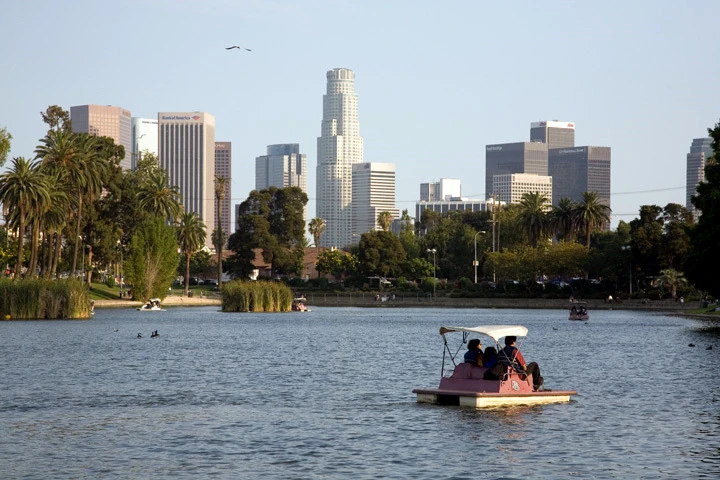
Echo Park Apartments: Rent Control Doesn’t Tell the Whole Story

By Taylor Avakian, Principal Broker & Founder of The Group CRE
A couple of years ago I toured a fourplex on one of the hill streets above Sunset, a few blocks up from Echo Park Lake. Built in 1926, stucco, original hardwood in three of the four units, a garage nobody had parked in since the Reagan administration. The seller had owned it since the early nineties. The rent roll was the kind that makes out-of-state buyers close the PDF and move on. Two tenants had been there over fifteen years. One of them was paying $1,140 for a one bedroom that would have leased for around $2,200 the same week if it had been empty.
I’ve changed a few details, but that building is the one I think about whenever someone tells me Echo Park doesn’t pencil because of rent control.
I sell apartment buildings in Los Angeles. That is all I do. Echo Park comes up constantly, because buyers like the hillside streets, the old Craftsman homes, and the fact that Downtown is ten minutes away. What they ask about first is the age of the buildings, and for good reason. Most of the apartment stock here was built before 1978, which puts a big chunk of the neighborhood under the City of Los Angeles Rent Stabilization Ordinance, the RSO.
I get a version of the same call every few weeks. Someone from Texas or Arizona finds a building they like, sees “rent stabilized” on the flyer, and passes. I understand the reaction. I also think it skips the actual economics of owning older housing in this city.
Start With the Numbers
The RSO generally covers rental properties in the City of LA that were first built and occupied on or before October 1, 1978.
The Los Angeles Housing Department puts the count at roughly 624,000 rental units across about 118,000 properties. That works out to about five units per property, and that number tells you a lot about who owns LA. Most of the rent-stabilized housing in this city sits with families, individuals, and small operators like the seller of that fourplex. Institutional landlords are a small slice.
The regulated inventory isn’t shrinking either. The LA City Controller counted 661,851 RSO units as of 2024, up 18,345 from 2019. Over that stretch, 15,754 units left the RSO and 34,099 came in.
Useful context. But for a buyer in Echo Park, the numbers that matter are the rents.
The Four-Year Freeze Still Matters
From March 30, 2020 through January 31, 2024, annual rent increases on RSO units were frozen. None. Almost four years.
Now think about what happened to everything else during those four years. Market rents moved. Insurance moved a lot. Plumbers moved. Property values moved. Meanwhile, that one bedroom on the hill sat at $1,140 the whole time.
That gap between in-place rent and market rent is called loss-to-lease. When I underwrite an Echo Park building, it is the first number I want to see, because it tells me more about the next ten years than the cap rate does.
Starting July 1, 2026, the allowable annual RSO increase is 3%. The city’s revised formula ties increases to 90% of the 12-month change in CPI, with a floor of 1% and a cap of 4%.
Some of the old add-ons are gone too. As of February 2, 2026, LA eliminated the extra 1% increases for owners who paid for gas or electricity, along with the 10% bump for an additional tenant. So for this period, 3% is the number. Nothing stacks on top.
Where the Upside Actually Is
Go back to the $1,140 one bedroom. A 3% increase on that unit is about $34 a month. The gap to market was more than a thousand dollars. Anyone who underwrites that gap closing through annual increases is lying to themselves or to their lender.
The gap closes when the unit turns.
When a tenant moves out on their own, California law generally lets the owner set a new market rent for the next tenant, subject to state and local rules. One unit turning doesn’t change much. But that fourplex had two long-term tenants, two mid-term tenants, and a buyer who planned to hold for ten years. Over a hold like that, units turn. They just do. People retire, move in with a partner, take a job in San Diego. Each time it happens, the building marks a little closer to market, and because income drives value in multifamily, the whole building is worth more than it was.
The buyer on that deal, by the way, was a couple from Glendale buying their second building. Not a fund. That is the normal Echo Park buyer.
Echo Park Rewards Patience
Let me be blunt about one thing. If your plan is to buy a rent-stabilized building and push the long-term tenants out, don’t call me. It’s illegal, it’s expensive, and in this city it will end badly for you.
The real play is boring. Buy at a basis that works on the income the building produces today, not on a pro forma that assumes everyone leaves. Keep the building in good shape, because good buildings keep good tenants and good tenants keep paying. Know the RSO well enough to explain it to your lender. Fix things when they break. Then let ordinary turnover do the work it has done for every small owner in this neighborhood for the last fifty years.
That is a patient strategy, and patience has always been part of owning small apartment buildings.
Echo Park is well suited to it. Old housing stock with good bones, a location that isn’t going anywhere, and a deep supply of four, six, and eight unit buildings. Remember that five-units-per-property average. You don’t need a fund to play here. Most of the owners never had one.
Rent stabilization changes the math. Run the math the right way and it still works.
The fourplex on the hill closed. Last I checked, one of the mid-term units had already turned. The building is doing exactly what buildings like that do.
I keep a running breakdown of the Echo Park multifamily market, including current rent gaps and recent trades.
Want to talk through a specific one? Call or text me at 916-996-4421, email [email protected], or find me at thegroupcre.com.
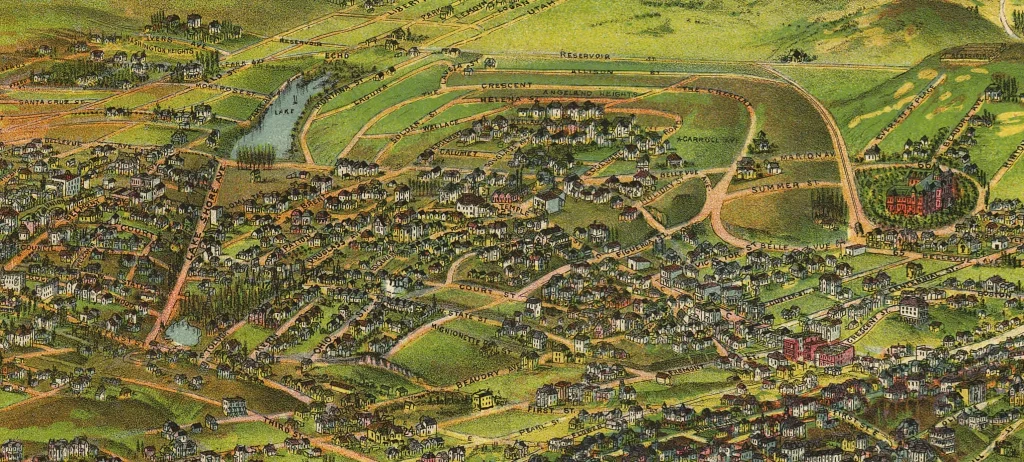
By Bruce Pierce, 1894 – www.loc.gov/item/75693096, Public Domain, https://commons.wikimedia.org/w/index.php?curid=94217100






 Accessibility