
Apartment pricing has been broadly flat rather than decisively recovering
Garden Apartments Face A Tougher Market As Supply Risk Returns

Apartment deal volume softened in July, but the more useful signal for investors may be emerging beneath the month’s thin transaction data: garden-style assets appear to be repricing for supply risk while mid and high-rise properties retain a measure of relative protection.
MSCI reported that U.S. apartment investment volume totaled $12.4 billion in July, down 16% from a year earlier. Garden-apartment sales fell 25% to $6.3 billion, while mid/high-rise volume declined 5% to $6.1 billion.
Jim Costello, co-head of MSCI’s real-assets research team, cautioned against treating those figures as a definitive measure of where apartment investment is headed. July is usually a light month for deal volume, and sales reported during the month can be incomplete because transaction records arrive unevenly from local jurisdictions. That makes summer volume especially prone to subsequent revisions.
“I never put too much into that monthly number,” Costello told GlobeSt.com. “I never lean too heavily on this month’s number of volume showed X.”
The July composition supports his caution. Portfolio and entity activity rose 21% from a year earlier to $3.4 billion, even as single-asset sales fell 25% to $9 billion. One California portfolio accounted for more than 40% of mid/high-rise portfolio activity during the month; without that sale, MSCI said mid/high-rise portfolio volume would have declined.
That does not make the report irrelevant. It changes what investors should look for. The sharper signal is not whether one month’s deal count points up or down, but whether pricing and cap rates are beginning to distinguish between apartment assets with different exposure to new supply.
Pricing Remains Under Pressure
Apartment pricing has been broadly flat rather than decisively recovering, Costello said. The market experienced some weakness around the end of last year and the beginning of this year, followed by a modest improvement, but not enough movement to establish a durable upward trend.
MSCI’s RCA Commercial Property Price Index for apartments was down 4.1% year-over-year in July. Meanwhile, the trailing 12-month average cap rate for all apartments rose to 5.6%, from 5.5% a year earlier.
Neither measure suggests a sudden reset. Together, however, they describe a market still absorbing pressure from the capital side of the equation. Investors remain uncertain about interest rates and the availability and cost of credit. In that environment, Costello said, cap rates can continue to move higher unless property income grows enough to offset the change in capital-market conditions.
The result is a market in which broad optimism is difficult to underwrite. Buyers cannot rely on a near-term decline in cap rates to support value. They have to be more specific about the income story, the competitive supply picture and how much pricing cushion is built into an acquisition.
Get a Free Multifamily Loan Quote
Access Non-Recourse, 10+ Year Fixed, 30-Year Amortization
Garden Risk Is Repriced
The distinction between garden and mid/high-rise assets is where July’s otherwise muted report becomes more revealing.
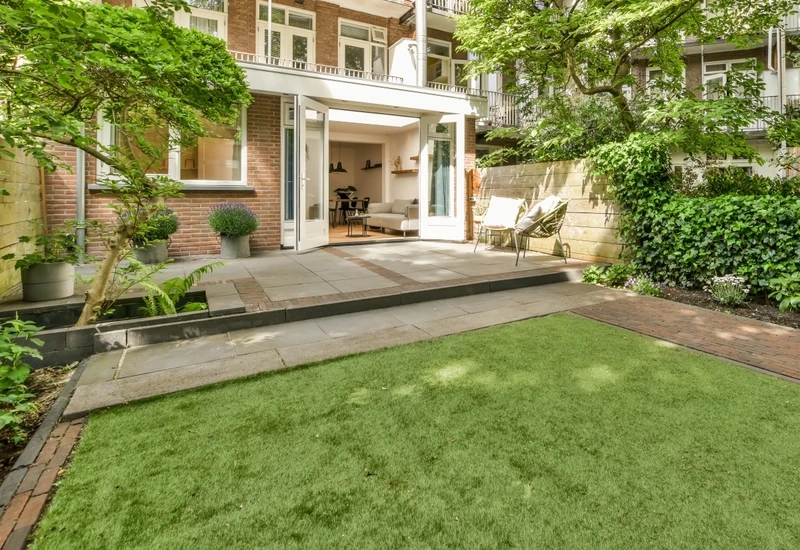
Costello said the cap-rate pressure is more apparent in garden apartments than in mid/high-rise properties. Garden assets are often concentrated in suburban, car-oriented markets, including many high-growth Sun Belt metros that attracted an enormous share of investor attention during the pandemic-era migration cycle. Those markets can support substantial renter demand, but they also tend to offer developers more opportunities to add new apartment supply.
Mid- and high-rise properties generally face a different development environment. Dense urban locations can be difficult to build in because of site limitations, adjacent uses, construction complexity and local restrictions. Those barriers can create a degree of supply protection, even where investors otherwise remain cautious about urban real estate.
The market is beginning to recognize that difference more clearly, Costello said. The cap-rate spread between garden and mid/high-rise apartments remains narrow, but it appears to be widening toward a more conventional relationship in which assets with greater exposure to future supply command a higher yield.
“It’s kind of a return to what was normal in the past,” Costello said.
The Pandemic Premium Fades
That shift matters because the pandemic temporarily rewarded a different set of assumptions. Migration toward Southern and Southeastern markets became a powerful apartment investment narrative as renters left more restrictive and expensive markets. Investors and syndicators embraced the growth story, sometimes bidding aggressively for suburban properties at cap rates near 3%, Costello said.
The flaw was not believing in Sun Belt growth. It assumed the demand surge would remain permanent and that growth alone could overcome the higher risk of new construction. Garden properties in many of those markets may benefit from favorable demographics, but they are also more vulnerable when developers can bring competing apartments online.
As those pandemic-era assumptions fade, the market appears to be restoring a risk premium that had narrowed too far. That is a more consequential development than the July decline in transaction volume. It suggests buyers are moving away from broad regional enthusiasm and returning to property-level discipline.
Apartment investors should therefore treat July’s volume statistics as preliminary rather than directional. Costello expects the figures to be revised, and a single large portfolio sale can materially alter the month’s totals. The clearer takeaway is the gradual re-emergence of supply protection as a valuation advantage.
What Investors Should Underwrite
The next stage of apartment investing may not be defined by a broad rebound in sales volume or a rapid return to lower cap rates. It may instead be defined by the growing importance of micro-level differences: whether a submarket can absorb incoming supply, whether rent growth is durable enough to offset financing costs and whether a property’s location limits future competition.
Garden apartments are not inherently weaker investments, and mid/high-rise properties are not insulated from higher financing costs or muted price growth. But the relative pricing trend points to a more demanding market. Investors may once again have to pay close attention to the variables that can get lost in a migration narrative: land availability, development pipelines, density constraints and the durability of property income.
In other words, July may have been too thin to call a turning point. But it may still mark a useful reminder that, as the apartment market works through the aftereffects of the pandemic, supply risk is no longer something investors can afford to treat as an afterthought.
Source: GlobeSt.









 Accessibility