
Shared Structural Repairs for Apartment Buildings Under SB 721

By James Malki with Malki Construction
Shared structural elements are critical components of multifamily apartment buildings. While individual units are leased to tenants, the structural systems that support balconies, walkways, landings, stair assemblies, and load-bearing walls remain the responsibility of the property owner. Under California Senate Bill 721 (SB 721), structural repairs for apartment buildings are no longer limited to isolated balcony framing concerns. Inspection findings frequently reveal deficiencies in shared structural components that affect multiple units simultaneously. Properly addressing these shared-element structural repairs requires engineering oversight, disciplined construction planning, and a comprehensive understanding of compliance obligations.
SB 721 focuses on exterior elevated elements (EEEs), yet repair implications often extend into the broader structural systems supporting those elements. When an inspection identifies compromised balcony joists, deteriorated ledger connections, corroded reinforcement, or failing guardrail anchorage, the load path of the entire structural assembly must be evaluated. Structural systems do not function independently. A weakened beam can affect adjacent framing, and a compromised connection may transfer stress into neighboring units. For this reason, structural repairs under SB 721 must be approached holistically rather than as isolated fixes.
One of the most common repair scenarios in apartment buildings involves vertically stacked balconies supported by continuous beams or framing systems. In many older multifamily properties, balconies are aligned floor-to-floor, meaning structural components connect across multiple levels or tie into shared load-bearing walls. If water intrusion has deteriorated support beams or ledger boards at one level, adjacent assemblies may also be vulnerable. Effective repair construction includes selective opening of representative areas to assess the full extent of deterioration, reinforcement or replacement of compromised framing members, and restoration of structural continuity across the system.
Podium deck systems present another critical shared structural condition in apartment buildings. Many mid-rise properties utilize podium construction above parking garages or mixed-use ground floors. These assemblies support pedestrian traffic, amenities, and sometimes landscaping features. When SB 721 inspections reveal cracking, spalling, membrane failure, or drainage deficiencies in podium decks, repair construction must address both surface deterioration and underlying reinforcement. Because podium slabs distribute loads across broad structural supports, localized damage can impact overall system performance. Concrete restoration, reinforcement replacement, structural strengthening, and integrated waterproofing upgrades are often necessary to restore load-bearing capacity.
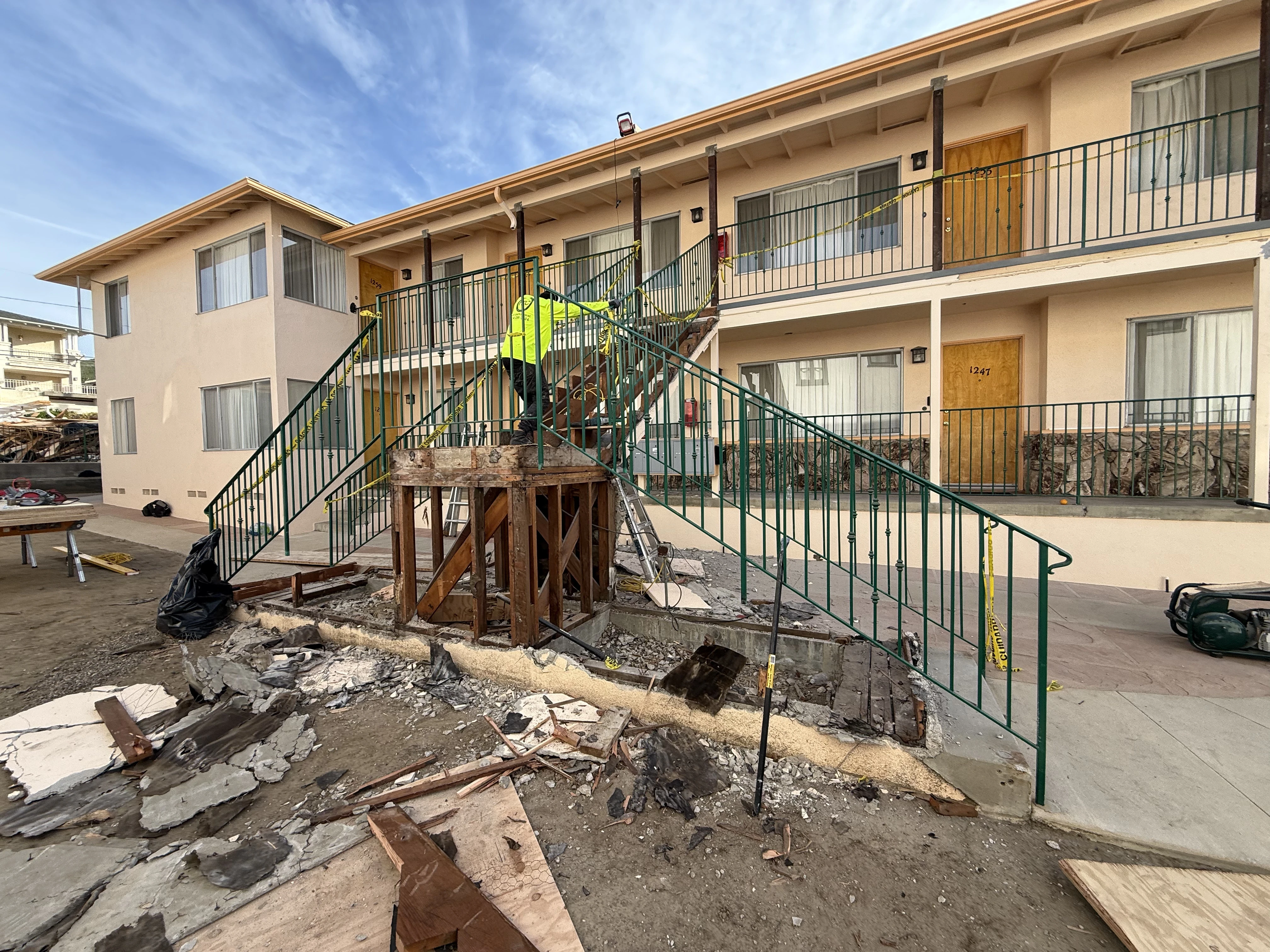
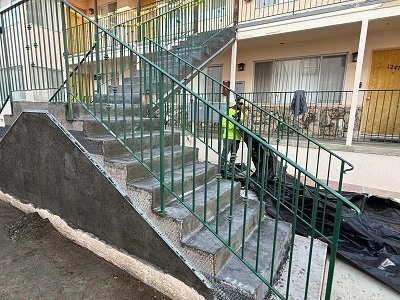
Shared stairways and elevated walkways are also subject to SB 721 inspection requirements when they rely substantially on wood structural components. These elements experience concentrated foot traffic and environmental exposure, making them susceptible to fatigue, corrosion, and moisture-related deterioration. In wood-framed systems, stair stringers and landing support frequently decay at flashing transition points. In steel systems, corrosion at anchor bolts and welded connections may reduce structural strength. Repair construction must include reinforcement of attachment points, replacement of deteriorated framing, and installation of corrosion-resistant materials designed for long-term performance.
In some cases, structural deficiencies identified during SB 721 inspections extend beyond the elevated element itself. Repeated moisture intrusions at balcony connections may lead to hidden deterioration within adjacent wall assemblies. Over time, this can weaken framing members inside wall cavities and compromise load-bearing components. Structural repair construction may therefore require wall opening, sheathing replacement, reinforcement of framing, and improved flashing integration to correct the underlying cause of deterioration.
Malki Construction Stair Repair
A defining characteristic of shared structural repairs under SB 721 is coordinated budgeting and planning. Because these elements serve multiple units simultaneously, repair costs affect the overall property operation rather than a single tenant space. Accurate scope definition and disciplined construction sequencing are essential to control expenses and minimize disruption. Phased repair strategies may allow owners to address life-safety hazards first while preparing for additional corrective work identified during inspection.
Waterproofing integration remains central to successful structural repair projects. Balcony and walkway assemblies depend on properly functioning membranes, flashing, slope design, and drainage pathways to prevent moisture intrusion. When these systems fail, deterioration may spread laterally across multiple units before visible symptoms appear. Effective repair construction requires removal of compromised materials, substrate preparation, and installation of high-performance waterproofing systems with proper detailing at edges, penetrations, and transitions.
Construction logistics in occupied apartment buildings demand careful coordination. Temporary shoring may be required when structural members are replaced or reinforced. Resident access routes must be maintained safely, and protective barriers must be installed during active construction. Clear communication with tenants regarding repair timelines and access restrictions is essential to minimize operational disruption while maintaining compliance.
SB 721 also requires documentation of corrective work. When deficiencies are identified, owners must demonstrate that repairs were completed in accordance with applicable standards and timelines. This may include permits, inspection approvals, photographic documentation, and verification by licensed professionals. Proper documentation strengthens compliance posture and reduces potential liability exposure.
Shared structural repairs under SB 721 should not be viewed as isolated compliance tasks. They present an opportunity to strengthen aging infrastructure, improve durability, and reduce future inspection risks. Upgrading guardrail anchorage, enhancing structural reinforcement, improving drainage design, and integrating long-lasting waterproofing systems can significantly reduce recurring deficiencies in future six-year inspection cycles.
Delaying structural repair work can lead to escalating costs and increased liability. Because exterior elevated elements are exposed to constant environmental stress, deterioration rarely stabilizes on its own. Addressing deficiencies promptly helps protect tenants, preserve property value, and reduce long-term capital expenditures.
Malki Construction approaches SB 721 structural repair projects with a comprehensive methodology focused on safety, compliance, and long-term resilience. Our process emphasizes engineering coordination, precise execution, waterproofing integration, and thorough documentation to ensure apartment buildings remain structurally sound and inspection-ready for future cycles.
If your apartment property has identified deficiencies under SB 721, professional structural repair construction is essential. Contact Malki Construction at 714-296-3004, email [email protected] or visit www.MalkiConstruction.com to begin planning your SB 721 structural repair consultation and protect your building’s long-term safety and performance.







 Accessibility