
Which improvements matter most for competing with newer competition
The Upgrades That Matter: Maximizing NOI on Existing Buildings

The oversupply of new multifamily buildings—especially elevated in the Sun Belt—has created a difficult market for existing properties. Even with construction starts slowing due to a challenging environment,already-financed projects are still being completed, and the market correction has a way to go.
Many new Class A properties have responded with aggressive incentives. That forces existing Class B and C properties to offer concessions of their own, making it challenging when rents are already lower and repair/maintenance budgets are larger for older buildings.
According to Realpage data in April, 16.9% of stabilized apartments are using concessions. The average discount on a 12-month lease equated to almost six weeks of free rent. Class C properties are discounting the most—20.7% compared with 13.7% for Class A and 15.1% for Class B—yet are still losing ground. Class A rents grew 1.9% annually in the most recent data, while Class C fell 2%.
Clearly, competing with new construction on prices and concessions alone is a losing game for older properties. Upgrades are another way to level the playing field, but operators must choose wisely to grow NOI. Multifamily Executive spoke with four industry pros about how they deploy upgrade dollars—and which improvements matter most for owners and operators competing with newer supply.
Technology That’s the Cost of Entry
Although there are plenty of exciting technology bells and whistles property owners can consider, a few areas stand out as features that renters value most and that are fast becoming an expected baseline for any multifamily home.
High-speed internet: “We surveyed our 60,000 to 70,000 residents—the No. 1 priority need is high-speed Wi-Fi,” says Joe Lubeck, founder and CEO of American Landmark Apartments. Melanie French, CEO of RR Living, agrees: High-speed Wi-Fi has become “a norm and a requirement” industry-wide, she says, “because our world is so technology-driven.” She points to one estimate that the average home now runs 13 to 21 connected devices. Industry data backs them both up: In a 2024 National Multifamily Housing Council (NMHC)/Grace Hill survey of 172,000-plus renters, 90% said they wouldn’t rent without high-speed internet, and 87% called access on move-in day “very important” or “absolutely essential.”
Smart-home upgrades: “Smart locks and smart thermostats have 100% penetration in our properties,” Lubeck says. Matthew Rosenthal, founder and managing partner of Eastham Capital, agrees that smart features make properties more attractive to prospective tenants—and survey data explains why: A recent Parks Associates study revealed that half of renters searching for a new home worry about community safety and want smart features. The NMHC/Grace Hill survey found that 67% of renters are interested in or wouldn’t rent without keyless smart locks—and would pay a monthly premium for it. And 3 in 4 Americans surveyed by Pew Research Center in May say their home energy costs have risen recently, with 42% saying costs have gone up “a lot”—demonstrating why a thermostat that saves money has become a selling point.
Report Your Tenant’s Rent Today!
Report on-time & missed payments to Experian, Equifax, and TransUnion
Must-Have In-Unit Improvements
Beyond a fresh coat of paint and like-new finishes, a few improvements were identified as being nearly essential to competing with new buildings for renters.
Washer/dryer: A communal laundry room, which used to be standard, is no longer acceptable in many renters’ eyes, as in-unit appliances have become what Rosenthal calls “the biggest thing in apartments today.” “People do not want to go to the laundry rooms anymore,” he says. Mark Enfield, chief operating officer of TruAmerica Multifamily, says his company installs in-unit laundry “if we can make the math work and it’s not too invasive to the resident,” adding that renters will often pay more per month for units that include them. It’s an approach that has worked well across 30 to 40 properties in his portfolio. In one of them, eliminating the laundry room left a space large enough to convert into an accessory dwelling unit—adding an entirely new unit to the property.
Plumbing/HVAC: Enfield recommends reviewing work orders and the age of plumbing, water heaters, and other infrastructure to accurately assess the state of existing systems before acquiring older buildings. French makes the same case: “If you’re buying a community that’s 15 or 20 years old, the work you do during the due diligence is critical. You should walk every single unit. You want to be prepared to change plenty of air conditioners or water heaters, because you’re going to replace more than you expected.”
Bedroom/bathroom addition: Since many older apartments have bigger rooms than newer builds, Rosenthal recommends looking for opportunities to repurpose that space. “We bought a property in Chicago that had huge two-bedroom units, and we’re constructing walls to make a third bedroom. Three-bedrooms are amazingly popular because many families have two kids.” This transforms one of the least desirable configurations to an in-demand one: “The worst apartment out there is the two-bedroom, one-bath—even worse than a three-bedroom, one-bath, though in today’s market.” (Rosenthal notes that doesn’t mean bathroom count stops mattering—in today’s market, renters still prefer a separate bath, if possible.)
Moderate kitchen/bath improvements: While kitchen and bath updates are still a top priority, high-end, high-function appliances aren’t the must-have they once were. “People don’t cook like they used to,” Rosenthal says. “The appliances have to be clean, but they don’t have to be amazing. We have some apartments where we actually took out the dishwashers and put in washer-dryers that fit the same space.”
In-Demand Shared Amenities
Package solutions: In an era where e-commerce and convenient online ordering dominate, Rosenthal says, “managing package delivery has become like a full-time job of management offices these days.” Renters put secure package management second after high-speed Wi-Fi on Lubeck’s recent resident survey. It’s part of how prospective renters vet a property, Rosenthal says: “They want to know, will the office collect and hold packages for them?” A dedicated package room with lockers for secure delivery is a key value-add.
Exercise spaces and outdoor areas: Rosenthal recalls a time when “two treadmills was a gym.” That’s changed now, he says. “Now we’ll make a nicer gym—a place people actually want to go.” The same goes for outdoor gathering spaces, says Enfield: “Residents want outdoor communal areas where they can picnic and grill with family.” Rosenthal agrees: “It helps people really feel like it’s a home.”
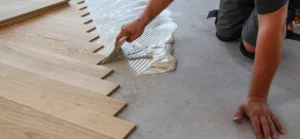
Pet amenities: These are another top priority for residents—Lubeck’s survey found that most renters own pets. Enfield says his residents want dog parks and wash stations. Lubeck offers another way to cater to pet owners: “Eliminate all carpet in units—install all hard-surface flooring, like LVT.”
TruAmerica also pays attention to what residents don’t use. “We acquired a property in the Seattle metro last year that came with an indoor pool. The previous owner said no one ever uses it. So we have a costly amenity that doesn’t fulfill resident demand, and we’re looking to fill it in and do something else with the space,” says Enfield. “Got a huge clubhouse with common areas that no one uses, and a tiny fitness center? Repurpose the whole clubhouse into an expanded fitness center. We do a property-by-property assessment of the best use of the space.”
How to Prioritize Upgrades
The clearest advice across all four sources: prioritize upgrades based on what residents actually want. Broader survey data backs that up—a 2025 study found that apartment renters are far less satisfied than condo owners, with a net promoter score of -25 compared with 12 for condos. That spells opportunity to compete by increasing resident quality of life. “An old property that’s clean and appealing with great service is better than a new property with poor service,” says Rosenthal.
Operators accustomed to maintaining older buildings may have an upper hand in the current overbuilt market: French has talked to developers whose business model was to build, lease up and sell—and who are now stuck holding properties they can’t offload, forced into an ongoing management and retention role they’re not used to.
Historically, she says, these operators have never had to focus on retention—their communities were typically sold within three to five years, before warranties expired and maintenance costs kicked in. “Life is very different when you’re managing a brand-new community than it is when you’re managing something older.”
Upgrades and repairs aren’t just about attracting new renters—retention matters just as much. The cleaning and maintenance needed to turn over a vacated apartment adds up, French says: “You’re not doing that for less than $3,000.” Add in lost rent, paying for utilities on vacant spaces, and the chance of vandalism, she says “you’re losing anywhere from $5,000 to $8,000 if someone moves out.” And poor resident experiences will reverberate across NOI. “Not only have you lost their business, you’ve lost the six to 10 people they would have recommended you to, who then would have told others.”
The right upgrades lead to happy residents, who drive both retention and positive word of mouth and online reviews—which in turn attract new renters, French says. “If you build trust with your residents, and they have trust that you’re going to take care of their needs, that is step No. 1 to success for retention, for financials, for investors, everything.”
Source: Multifamily Executive






 Accessibility