
7 Ways AI Is Improving Electrical Maintenance in Multifamily Properties

Ask a property manager what keeps them up at night, and you’ll hear about roofs, boilers, maybe a problem tenant on the third floor. Wiring rarely makes the list. It should. A slow plumbing leak announces itself with a stain on the ceiling. A dying furnace gets your phone ringing by dinnertime.
The NFPA’s research on home electrical fires identifies electrical failure and malfunction as leading causes of home structure fires year after year, with damage well over a billion dollars annually. Owners of multifamily buildings sit in an awkward spot with this.
You carry the habitability liability, you pay for the emergency repairs, and yet the actual condition of the wiring is mostly invisible to you between inspections.
Not chatbots writing your lease renewals – the duller, more useful kind. Software that stares at electrical data all day without getting bored, sorts tenant complaints by how dangerous they sound, and helps a shrinking pool of licensed electricians waste fewer hours on the wrong jobs. Seven examples, in rough order of how much they matter.
1. Monitoring That Catches A Failing Panel Months Early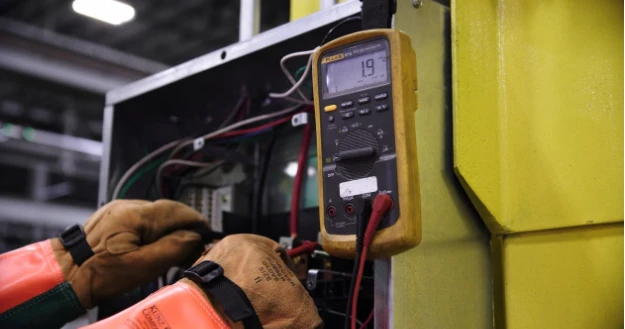
The old model was a sample: an electrician looks at your panels for one afternoon every year or two, and you hope nothing changes in between. The new model is continuous. Small sensors at the panel (or on individual circuits) track voltage, current, and arcing signatures around the clock, and machine learning models compare the readings against known failure patterns.
Some of this has already gone mainstream. Ting, a plug-in monitor from Whisker Labs, gets handed out free by several major insurers because it flags arcing hazards early enough to prevent claims. Commercial panel-monitoring platforms do the same across an entire building.
I’d call this the single biggest change in electrical maintenance in decades. You learn about a deteriorating connection from a dashboard notification instead of a fire report.
2. Scheduling Software On The Contractor’s End (This One Affects You More Than You’d Think)
Good electricians are scarce and getting scarcer. The Bureau of Labor Statistics projects around 81,000 electrician openings a year over the coming decade, a lot of it just replacing people who retire. Scarce trades mean every missed appointment and wasted truck roll costs somebody money – usually you.
Which is why it’s worth noticing what’s happened on the contractor side. A growing share of electrical shops now run intake, quoting, and dispatch through purpose-built AI for electricians software – calls answered after hours, the right tech sent with the right parts, arrival windows confirmed without a human dispatcher touching anything.
For a property manager, the difference is mundane but real: fewer no-shows, quotes back the same day, tenants who actually know when someone’s coming. When I vet electrical vendors these days, I ask how they handle scheduling. The answer usually predicts how the whole job will go.
3. Load Analysis For Circuits Doing Jobs They Weren’t Sized For
Apartment electrical demand has changed more in fifteen years than in the fifty before it. Space heaters, window AC units, a gaming PC in every other unit, and now EV chargers in the garage. Plenty of circuits installed in 1987 are carrying 2026 loads, and overloading remains a stubbornly common fire cause.
Load-analysis software reads consumption patterns building-wide and tells you which circuits run near capacity, when, and where. So instead of a vague anxiety about “old wiring,” you get a ranked, budgetable list of upgrades. And if the real culprit turns out to be a tenant running three power strips off one receptacle, you have data for that conversation too.
4. Triage That Knows “Burning Smell” Beats “Dead Outlet”
Here’s the thing about tenant maintenance requests: “my outlet doesn’t work” might mean a tripped GFCI, or it might mean the beginning of a fire. Tenants can’t tell the difference. Neither can a ticket queue sorted by date received.
AI intake tools read incoming requests, ask a couple of automatic follow-up questions, and score urgency from the language itself. Flickering across several rooms, warm cover plates, anything involving a smell – straight to the top, weekend or not. One dead receptacle in a bedroom waits its turn with the dripping faucets.
Landlords have to keep electrical systems safe and habitable, and a hazardous ticket that sat unread for four days looks terrible in front of a judge. AAOA’s piece on property management repairs and maintenance makes the point that response speed is where good operators separate themselves. Triage software makes sure the scary tickets never get buried.
5. Computer Vision Reading Thermal Scans
Thermal imaging isn’t new. Point an infrared camera at a panel and hot spots from loose connections or failing breakers light right up. The bottleneck was always the review – a qualified person squinting at hundreds of images, one by one.
Batch-upload the scans from an annual inspection and the software flags temperature anomalies, compares each panel against its own history, and ranks findings by severity. But the review that took days takes an hour, and finding number 37 gets the same attention as finding number 1, which is more than you can say for a human at the end of a long day.
For bigger portfolios, this changes the math enough that annual building-wide thermal inspections stop being a luxury.
6. A Paper Trail That Builds Itself
Sooner or later, documentation decides something for you. An insurance claim after a fire. A code inspection. A fight over whether the tenant’s extension-cord habit or your wiring caused the damage – and since responsibility genuinely can fall either way, AAOA’s rundown of landlord and tenant maintenance responsibilities is worth a bookmark.
AI maintenance platforms keep the record without being asked. Sensor alerts, tenant reports, work orders, technician notes, photos – all timestamped, all searchable by unit. Adjuster wants to know when that panel was last inspected? Thirty seconds.
Tenant claims you ignored a hazard? Pull the response timeline. Plenty of smaller owners still run on the shoebox-of-invoices system, and honestly, this feature alone probably justifies the subscription.
7. Replacing Equipment On Evidence Instead Of Guesswork
The same pattern-recognition that predicts failures also tells you what’s still healthy. The industrial world figured this out first – Coruzant Technologies has a good overview of how AI and IoT transform predictive maintenance on factory equipment, and the logic transfers cleanly to a 60-unit building.
For capital planning, it means you stop replacing panels, transformers, and common-area lighting on a calendar. Some components turn out to have years left – some reveal themselves as this-budget-cycle problems. Either way you’re spending on measured condition, not on a rule of thumb somebody wrote down in 1995.
Where To Actually Start
Nobody needs a full smart-building retrofit on day one, and frankly most buildings shouldn’t buy one. A saner sequence:
Add AI triage to whatever maintenance-request system you already use. Ask your electrical contractors what software runs their scheduling and diagnostics – favor the ones with a real answer. Then fold the alerts into the preventive routines you already run. No written routine yet? AAOA’s guide to keeping up with rental property maintenance is a decent skeleton to build on.
One more thing on cost: monitoring hardware for a mid-sized building generally runs less than one emergency panel replacement, and some carriers now offer premium credits for buildings with electrical fire monitoring installed. Call your insurer before you buy anything. The discount occasionally covers the hardware outright.
Conclusion
The riskiest equipment in a multifamily building hides behind drywall and panel covers, and a traditional inspection schedule samples its condition a few days a year at best. AI closes that gap – continuous monitoring instead of snapshots, triage that surfaces the dangerous tickets, contractor tools that stretch a scarce trade further.
The owners who’ll get the most out of this aren’t the ones chasing every shiny tool. They’re the ones who pick two or three of these, bolt them onto routines that already exist, and let the software do the one thing no inspection calendar ever managed: watch the building all the time.







 Accessibility