
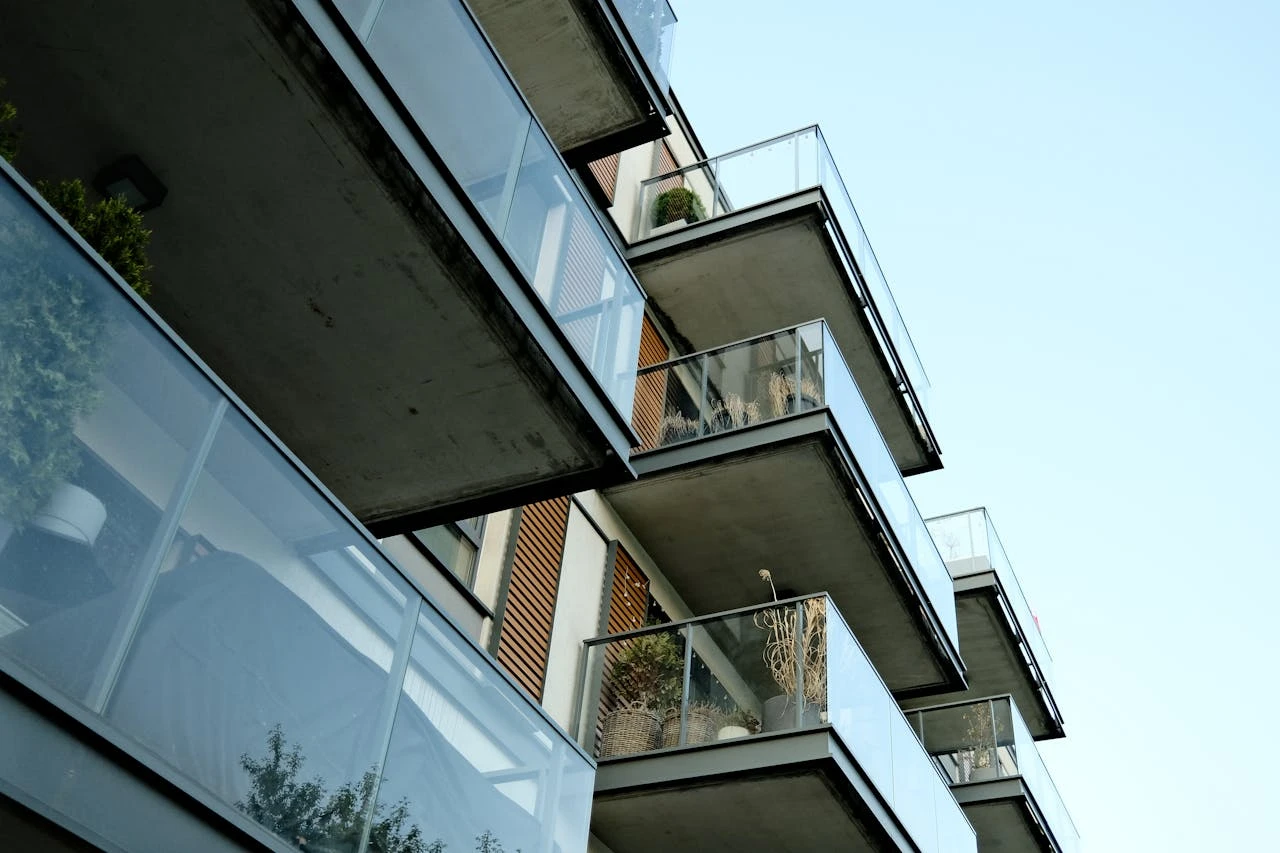
The Deck Inspection Debacle Continues

For apartment owners getting unusual calls from insurance companies about deck inspection reports, the deck inspection conversation isn’t theoretical anymore – it applies directly to a large portion of California’s housing stock.
If you own, operate, or manage apartment buildings or community associations with Exterior Elevated Elements (EEEs)—balconies, decks, stairways, walkways, or landings—especially those constructed with wood or wood-based structural components, you are now operating under mandatory inspection laws.
That includes:
- Apartment owners subject to SB 721
- Condominium associations and HOAs under SB 326
- Property managers responsible for execution and compliance on both sides
In California, these structures are no longer treated as routine maintenance items. They are classified as life-safety components that require scheduled inspections, formal reporting, and documented repairs.
And here’s where many owners and managers are still catching up:
It’s not just about whether you have balconies or walkways—it’s about whether those elements rely, even partially, on wood structural support or waterproofing systems that are susceptible to hidden deterioration over time.
That distinction matters because it determines:
- Whether your property falls under the law
- The type of inspector you are required to use
- The level of detail expected in your report
- And ultimately, your exposure if something goes wrong
The Expanding Scope of Responsibility
Community association managers and apartment owners are now facing the same reality from different angles.
Managers are being asked to coordinate compliance across multiple properties, boards, and budgets—often without clear direction or sufficient vendor availability.
Owners, on the other hand, are confronting something more fundamental:
the realization that these inspections don’t just check a box—they uncover liabilities that must be addressed.
In both cases, the role has expanded.
This is no longer just property management or ownership.
It’s regulated asset oversight.
Why the Inspection Team You Choose Matters
Another critical shift is happening beneath the surface—who performs these inspections is becoming just as important as the inspection itself.
For many properties, particularly HOAs under SB 326, inspections must be completed by a licensed architect or structural engineer. Even where broader qualifications are allowed, the complexity of wood-framed EEEs often demands a higher level of expertise.
This is where a growing number of owners and management firms are moving toward in-house or directly retained architectural relationships, rather than relying solely on third-party vendors.
There are clear advantages:
- Greater consistency across multiple properties
- Faster turnaround on reports and follow-up evaluations
- Better integration between inspection findings and repair design
- Reduced risk of conflicting opinions between inspectors and contractors
More importantly, it creates continuity.
Instead of treating inspections, reports, and repairs as separate transactions, it turns them into a coordinated process—which is exactly what these laws are pushing the industry toward.
A New Standard for Wood-Framed Construction
Wood-framed balconies and walkways have been a staple of California construction for decades. They’re cost-effective, functional, and widely used.
But they also share a common vulnerability:
they can deteriorate from the inside out, often without visible warning signs.
That’s the core reason these laws exist.
And it’s why compliance isn’t just about meeting a deadline—it’s about understanding the condition of structures that people use every day, often without a second thought.
You can place this directly before the main article body.
If you want next, I can:
- Blend this seamlessly into the full article (so it reads as one piece), or
- Add a short “common mistakes owners are making right now” section right after this intro, which would fit perfectly as the next transition.
About the Author
Malki Construction, Inc.
Specializing in Repairs & Waterproofing for SB 721 & SB 326 inspections, exterior elevated element (EEE) evaluations, and multifamily structural repairs
Construction & Waterproofing Office: (714) 296-3004
Email: [email protected]
Early & Late SB 721 & SB 326 Inspection Office: (657) 707-9127
Email: [email protected]
Websites:
www.malkiconstruction.com
www.southcoastdeckinspections.com








 Accessibility