
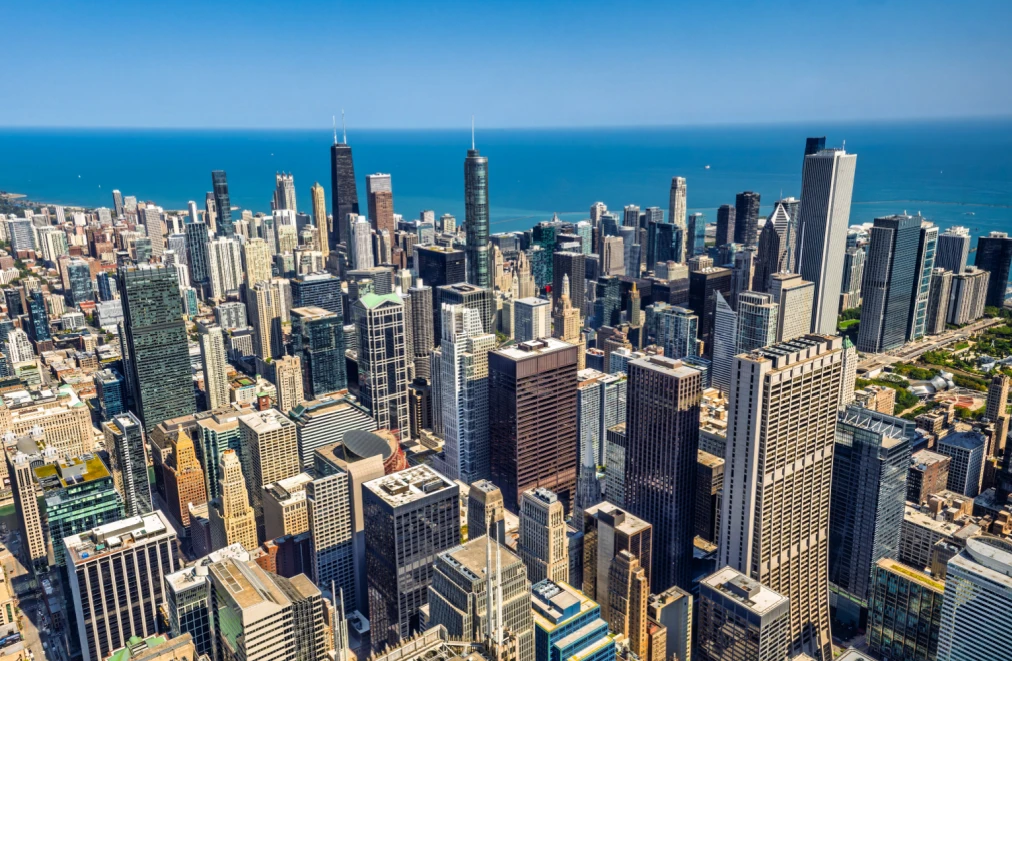
Rental Competition in Early 2026: Cooler Overall, but Cities Like Chicago, Atlanta & San Francisco Buck the Trend

The year started on a promising note for apartment hunters as the national rental market has cooled off slightly, at least on paper: The U.S. competitiveness score dipped from 75.7 to 75.4. In theory, finding a place should be getting easier.
But in cities like Chicago, San Francisco and Atlanta, the opposite is happening. In fact, these markets aren’t just competitive — they’re going against the national trend and getting more competitive faster than anywhere else in the country.
Chicago alone saw its competitiveness score surge 9.5 points year-over-year for the largest jump of any major metro as new apartment construction has nearly evaporated. Now, nine renters compete for every available apartment here.
And yet, that’s nowhere near as tough as Miami, which has remained the most competitive rental market in the country for the last year. So, if you’ve been scrolling through apartment listings lately and feeling like every place you love disappears before you can even schedule a tour, you’re not imagining things. Here’s where the competition is fiercest and where it’s easier to find an apartment.
Key takeaways:
- Compared to early 2025, major tech hubs are gaining heat the fastest, with Chicago in the lead, followed by San Francisco, Atlanta and Silicon Valley.
- Chicago is also the second-most-competitive market nationwide, right behind Miami — the reigning champion of the last year.
- Lease renewals tell a big story. Markets across New Jersey, Suburban Philadelphia and the Midwest are where about eight out of 10 renters hold on to their rentals.
- Manhattan, NY, shifted gears after closing 2025 among the nation’s hottest rental spots. It’s now 24th nationwide with slightly fewer applicants per unit.
- Small cities are no easy alternative. Wichita, KS, stands out among the smaller markets after seeing the biggest competitiveness jump of any U.S. market. Amarillo, TX, is hot on its heels.
- The national market has eased a little. The U.S. RCI dipped from 75.7 to 75.4; apartments sit vacant a bit longer; and competition per unit is down, favoring renters.
Where is it hardest to rent in early 2026? To find out, RentCafe.com analyzed Yardi data using five essential factors across 139 of the largest U.S. markets, including:
-
How many renters competed for each available apartment
-
How many renters decided to stay put
-
How long it took for an apartment to get filled
-
Share of apartments that were occupied
-
Share of apartments that were new
Using these indicators, we calculated a Rental Competitiveness Index (RCI) of 75.4 for the U.S. rental market overall. This indicates a competitive market, albeit slightly cooler than one year ago. In other words, a score above 70 means it’s considerably tough for renters to secure an apartment.
The U.S. rental market cooled a notch, so why does it still feel so tough?
The U.S. rental market kicks off 2026 with a national RCI score of 75.4 out of 100 — down just a hair from 75.7 a year ago. In plain terms, the market has cooled off ever so slightly on a national level, but the day-to-day reality can still feel pretty intense for most apartment hunters.

Here’s what that looks like on the ground. The typical apartment gets filled in about 46 days, compared to 43 days last year. That might sound like you have more breathing room, but apartments are still gone in a month or less in the most in-demand cities.
Nationwide, about 92.7% of all apartments are occupied — meaning fewer than eight out of every 100 units are even available at any given time. Plus, you’re not the only one looking: Six people are competing for each vacant apartment. That’s down from seven last year, but still enough to make the process stressful.
One number that should matter to every apartment hunter is the lease renewal rate. Right now, 62.8% of renters are choosing to stay put and renew their leases rather than move. That’s a strong signal: When nearly two out of three people hold on to their apartment, it means there are fewer units hitting the market.
As for new apartments? Don’t count on a flood of fresh options. Only 0.6% of the country’s apartment inventory was recently built, which is down from 0.75% last year. So, while the national numbers suggest a tiny bit of relief compared to 2025, the reality in many cities is that good apartments still go fast, competition is real and being prepared to act quickly makes all the difference.
Need a Lease Agreement?
Access 150+ state-specific legal landlord forms, including a lease.
Chicago sees biggest jump in rental competitiveness among major metros
If you’re apartment hunting in Chicago, you’ve probably noticed that the market feels a lot tighter than it did a year ago — and the data confirms it. The Windy City’s RCI score jumped 9.5 points (from 79.3 to 88.8) for the largest year-over-year increase of any major metro in the country. This makes Chicago the market with the fastest growth in rental competitiveness among all 139 areas that we analyzed.
That leap pushed the city to the second spot overall among the hottest markets, just behind Miami. Now, apartments fill in about 38 days (down from 40), occupancy is up to 95.2% and about nine renters are eyeing each available unit. In this case, a big part of the story is supply. Barely any new apartments have been built as just 0.06% of Chicago’s stock is new (down from 0.54%), so there’s less than ever to go around.
San Francisco’s rental market is back and meaner than ever — ranking 2nd nationwide for rising competitiveness
Over in San Francisco, things are heating up again with artificial intelligence as the headline story. More precisely, AI companies leased 2.5 million square feet of office space last year. Now, they occupy 12% of the city’s offices, a clear sign that more jobs are being created. At the same time, the area’s RCI score climbed 6.1 points to 77, with occupancy ticking up to 94.2% and an extra prospective renter now competing for each vacancy.
That said, if you’ve been hoping the Bay Area would keep cooling off, this is a wake-up call: The share of new units dropped from 0.33% to 0.15%, meaning the supply of available apartments is shrinking right as demand picks back up.
Atlanta is 3rd fastest-rising rental market as construction of new apartments slows
Atlanta rounds out the top three with a six-point jump to 75.9. Atlanta had been one of the country’s construction hotspots in recent years, which gave renters more options. But new construction is slowing down. As a matter of fact, the number of new units completed in 2025 is the lowest annual total since the pandemic.
As expected, newly built units dropped from 0.68% one year ago to just 0.27% of total stock. Similarly, vacant days fell from 48 to 46 and occupancy ticked up to 91.1%. Essentially, for anyone looking in Atlanta, the window of easier apartment renting is starting to close, given the city’s expected job boom.
Silicon Valley slowly reverses its historically high renter turnover
Silicon Valley is another story worth watching. With fewer apartments being built and more renters choosing to renew rather than brave the market (+2.2% compared to one year ago to reach a lease renewal rate of 56%), options are slim. Toss in an AI industry that keeps drawing workers to the area and it’s no surprise that nine renters end up competing for the same apartment. As a result, Silicon Valley ranks fourth nationwide among areas with the fastest growing rental competitiveness in early 2026.
Jacksonville, FL, is 5th among metros with rising rental competitiveness
The list of fastest-heating markets also includes Jacksonville, FL, in the fifth spot. Here, apartment construction hit the brakes a little too hard given the city’s growing demand for rentals. Barely any new apartments were built in recent months (0.06% of all stock) compared to the more productive start of 2025, when new apartments represented 1.4% of the total. At the same time, more renters chose to stay in their homes for longer periods (64%), which only adds more pressure to the market.
Now that we’ve looked at the markets heating up the fastest, let’s see who’s already at the top.
Miami is toughest market to rent in, but Chicago and its suburbs are right on its heels
If you’re trying to rent in Miami, you already know it’s tough out there — and the data backs you up. Miami remains the most competitive large rental market in the nation with an RCI score of 90.5.
Although that’s a small dip from last year’s 93.1, the reality on the ground hasn’t changed much: About 13 renters are competing for every available apartment — the highest in any major metro — and 96% of units are already taken.
What’s more, nearly three-quarters of current renters (71.4%) are renewing their leases, which means fewer apartments ever make it back onto the open market. Even a new construction rate of 1.51% hasn’t been enough to give apartment seekers real relief.
What makes renting tough in Miami? The city has been the first choice of high-income professionals relocating from the coasts, but also for retirees and international buyers who decide to rent first. So, the area’s population is growing at a very fast pace. In fact, Miami added more than 64,000 residents in just one year. There’s also a lack of mid-priced rentals in the city as developers are focusing on luxury projects in addition to seasonal pressure from short-term winter renters.
Chicago surged into the second position at 88.8 — and, if you’re searching there, you can feel the squeeze. Faster fill times, higher occupancy and almost no new apartments opening have all combined to make Chicago one of the hardest places to land a lease. With about nine renters per available unit and a 61.4% renewal rate, it’s clear that rentals in the city are drawing serious competition. And it doesn’t stop at the city limits.
Suburban Chicago ranks third with a 70.4% lease renewal rate — one of the highest in the country. That means that suburban renters are staying put at very high rates, making already scarce vacancies even harder to come by. With 94.6% occupancy and nine people eyeing each open unit, the Chicago metro as a whole has become a two-front challenge for renters.
Rounding out the top five are Minnesota‘s Suburban Twin Cities (86.3) and California‘s Silicon Valley (85.4). Silicon Valley is an interesting case: Its renewal rate is a relatively low 56% (still higher than one year ago), which suggests that some renters are choosing to leave the Bay Area. But don’t let that fool you — occupancy is still above 95% and nine people are competing for every opening. So, while some folks are heading out, plenty of others are fighting to get in while apartment construction has been slowing.
Small-market shakeup: Wichita, KS; Amarillo, TX; and El Paso, TX, are heating up fastest
Think small cities are an easy place to find an apartment? Think again. Wichita, KS, posted the largest year-over-year RCI gain of any market in the entire country — large or small — with a 14.6-point surge that shot it from 76.4 all the way up to 91. That makes Wichita the hottest small rental market in America.
Apartments in Wichita fill in just 32 days; 95.4% of units are occupied; and whereas you used to compete with about six other renters for a vacancy, now there are nine. The kicker? New construction has all but stopped as the share of new units fell from 1.09% to a mere 0.23%. At the same time, the area’s economy is thriving, fueled by the aerospace and defense sectors. So, if you’re looking for apartments in Wichita, be ready to move fast.
Amarillo, TX, gained 10.6 points to reach 89.7. Currently, this West Texas city fills apartments in just 27 days — the second fastest in the country, right behind Fayetteville, AR, with its 25 days. That means that if a listing pops up on the first day of a month, it could realistically be gone in less than four weeks. With zero new constructions and eight renters chasing each vacancy (up from six), Amarillo has become surprisingly tough for apartment hunters.
El Paso, TX, jumped nearly as much after gaining 10.5 points to finish at 85.6. The big story here is demand: 11 prospective renters now compete for every vacant unit — up from seven — for one of the highest figures among small markets anywhere. Like Amarillo, El Paso hasn’t seen new apartments built recently, so all of that demand is spread across existing apartments. Here, the presence of the University of Texas at El Paso (with a record enrollment for 2026 of nearly 25,000 students) and one of the country’s largest military installations also add pressure to the market.
Other small markets tightening quickly include Columbia, SC (+9.6 points); Lexington, KY (+8.6); and South Bend, IN (+7.9) — proof that rising competition isn’t just a big-city problem.
But which small markets are the hottest?
Wichita, KS, is the tightest small rental market in the U.S.
Wichita, KS, is the most competitive small rental market in the country in early 2026 — and by a comfortable margin. Its RCI score of 91 is even higher than every large market. A year ago, Wichita was a solid, but unremarkable competitor. Now, it’s the standout story of the year.
What does that feel like if you’re actually searching for a place? Apartments here fill in one month — faster than any large market in America. Only about one in 20 units is available at any given time with occupancy at 95.4%. If you do find a vacancy, expect eight other people to be looking at it, too. And current renters aren’t making things easier: The lease renewal rate sits at 72.1%, which means nearly three-quarters of renters are choosing to stay right where they are, rather than take their chances on a move.
New construction isn’t coming to the rescue either — just 0.23% of the total number of rental apartments are newly built, a sharp drop from 1.09% last year. Wichita’s 14.6-point jump was fueled by tightening on nearly every front, including more renters per vacancy, fewer vacant days, higher occupancy and stronger renewal rates all at once.
Once again, Amarillo, TX, isn’t far behind, posting an RCI score of 89.7 — up a sharp 10.6 points from a year ago. The Texas Panhandle city is running lean: Units sit empty for just 27 days (four fewer than last year) and eight prospective renters are circling every vacancy, up from six. Yet, perhaps most telling is that not a single new unit was added during the period. Clearly, when supply stands still and demand keeps moving, the math gets uncomfortable fast.
The third hottest small rental market at the start of 2026 is Lafayette, IN, with an RCI score of 88.8 and the tightest occupancy rate of the three at 96.2%. A Purdue University-anchored renter base keeps demand humming year-round and 74.1% of renters chose to renew their leases — the highest renewal rate among the three small-market leaders. Even with occupancy near the ceiling and renewals that strong, Lafayette remains one of the most quietly competitive rental markets in the Midwest.
Fourth and fifth on our list are two Pennsylvania markets, Harrisburg and Lehigh Valley, both with more than 95% of apartments occupied and more than three quarters of renters renewing their leases.
Midwest dominates national competitiveness rankings
Here’s something that might surprise you: The toughest region for apartment hunters in 2026 isn’t along the coasts or in the Sun Belt, it’s the Midwest. The region leads the country with an average RCI score of 81.2, ahead of the Northeast (79.3), Florida (77.4) and every other part of the map.
Midwestern apartments fill in an average of 42 days; 93.8% of units are occupied; and 68.1% of renters choose to renew their leases — meaning that once someone gets a place, they tend to hold onto it. And, with new construction at just 0.34% of total stock, there aren’t many fresh options coming to ease the crunch.
The numbers are hard to argue with. Six of the top 10 and half of the top 20 most competitive large markets sit in the Midwest, including Chicago (2nd); Suburban Chicago (3rd); Suburban Twin Cities, MN (4th), Grand Rapids, MI (8th); Lansing–Ann Arbor, MI (9th); and Milwaukee (10th). The small-market side is just as lopsided, led by Wichita, KS (1st); Lafayette, IN (3rd); South Bend, IN (6th); and Youngstown, OH (9th).
So, what’s behind this? A few things working together. First, these cities haven’t been building many new apartments, which keeps supply tight. Second, rents in the Midwest are generally more affordable than they are on the coasts, thereby attracting a steady stream of people who might be priced out of places like New York or Los Angeles. And once those renters settle in, they tend to stay. That 68.1% average renewal rate is second only to the Northeast’s 70%. So, if you’re apartment hunting anywhere from Kansas City to Milwaukee, expect some real competition for the best units.
Otherwise, California leads among all regions with the most renters competing for a single vacant apartment with nine. All of the other regions average six or seven applicants for each rental.
FAQs: Hottest markets for renters at the start of 2026
Q: What is the most competitive rental market in the U.S. right now?
A: Among large markets, Miami holds the top spot with an RCI score of 90.5. About 13 people compete for every available apartment there. Among small markets, Wichita, KS, leads at 91.0 with apartments filling in just 32 days.
Q: Which rental markets are getting more competitive the fastest?
A: Chicago saw the biggest jump among large markets, gaining 9.5 RCI points year-over-year. Among small markets, Wichita, KS, surged 14.6 points — the largest increase in the country. Amarillo, TX (+10.6); El Paso, TX (+10.5); and Columbia, SC (+9.6) also tightened dramatically.
Q: Which region is toughest for apartment hunters?
A: The Midwest leads all regions with an average RCI score of 81.2. Six of the top 10 most competitive large markets are in the Midwest, including Chicago, Suburban Chicago and the Suburban Twin Cities.
Q: What does the Rental Competitiveness Index (RCI) actually measure?
A: It’s a score from zero to 100 that combines five things — how long it took for an apartment to get filled, the percentage of apartments that were occupied, how many people were competing for each vacancy, how many renters chose to renew their leases and how much new construction is hitting the market. The higher the score, the harder it is to find and land an apartment.
Q: Is renting getting easier or harder in 2026?
A: On a national level, it’s gotten a tiny bit easier as the U.S. RCI dipped from 75.7 to 75.4. But that average hides huge differences between cities. Many Midwestern and Florida markets are tighter than ever, while some metros in the West and Sun Belt have actually loosened up.
Q: Where has rental competition dropped the most?
A: Southwest Florida saw the biggest decline after falling 9.2 RCI points. Brooklyn, NY (−6.4); Eastern Los Angeles County, CA (−5.9); and Washington, D.C. (−5.5) also became noticeably less competitive — good news if you’re looking in those areas.
Source: RentCafe








 Accessibility