
Renting a starter home remains less expensive than buying
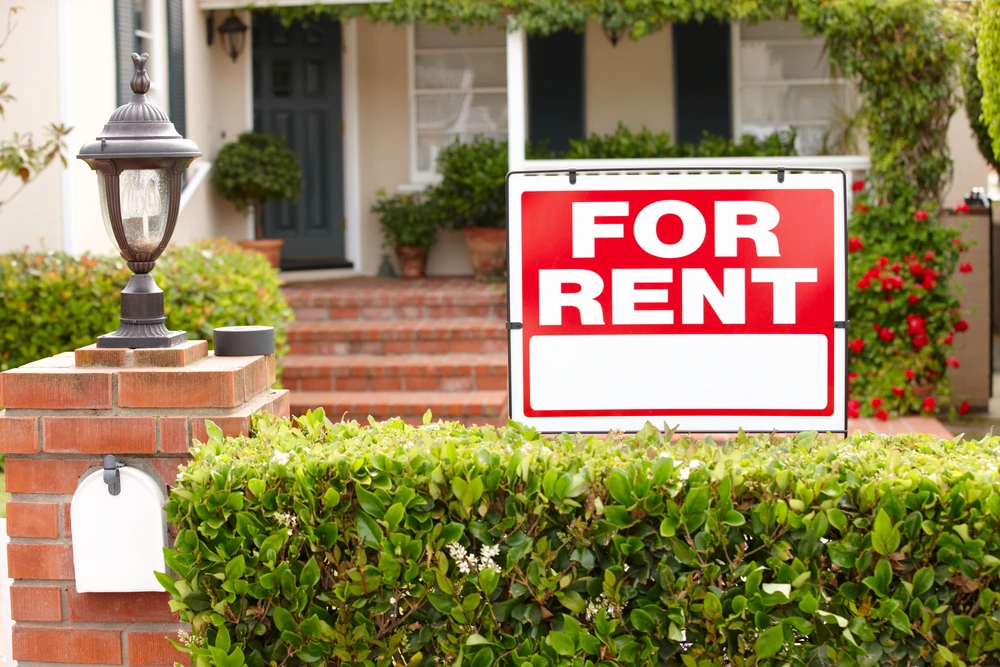
Renters Still Save $858 Monthly Over Homeowners But the Gap Is Shrinking

Renting a starter home remains less expensive than buying in all 50 of the largest U.S. metropolitan areas, continuing to support rental housing demand despite three consecutive years of annual rent declines.
The average monthly cost of buying a starter home reached $2,553 in July, $858 more than the national median asking rent of $1,695, according to Realtor.com. That means buying costs 50.6% more per month than renting, assuming a 10% down payment and including mortgage payments, homeowners association fees, property taxes and homeowners insurance.
The ownership premium remains substantial but has narrowed from July 2025, when buying cost $923 more per month than renting. The typical cost of ownership declined by $89 during the past year, compared with a $24 reduction in monthly rent.
Falling prices accounted for $57 of the decrease in ownership costs, while lower mortgage rates contributed another $33. The average 30-year fixed mortgage rate declined from 6.72% in July 2025 to 6.54% last month.
Report Your Tenant’s Rent Today!
Report on-time & missed payments to Experian, Equifax, and TransUnion
Markets Closest to Rental Parity
The cost gap varies sharply among markets. Orlando came closest to parity, with a median asking rent of $1,682 and an estimated monthly buying cost of $1,701, a difference of just $19 or 1.1%.
Birmingham recorded the next-smallest dollar gap at $68, followed by Pittsburgh at $131 and Baltimore at $167. Austin remained the most rent-favorable market on a percentage basis. Its $3,295 monthly ownership cost was $1,917, or 139.1%, above its $1,378 median rent.
Los Angeles had the largest dollar difference, with renting saving residents $2,049 per month. The gap reached $1,961 in Seattle, $1,917 in Austin and San Jose and $1,823 in New York.
A National Gap That Is Narrowing
The national median price for a starter home declined 2.9% year-over-year, twice the 1.4% decrease in rents. Average weekly earnings increased 3.8% during the same period, improving buying conditions for households able to overcome down-payment and financing barriers.
Realtor.com identified Oklahoma City, Orlando, Seattle, Miami, Tampa, Las Vegas and Nashville as markets where starter-home prices are falling faster than rents while wage growth matches or exceeds the national rate.
National rents nevertheless completed a third consecutive year of annual declines in July. Studios and two-bedroom units both declined 1.4%, while one-bedroom rents fell 1.3%.
The overall median remains 15.3% above July 2019 levels but has declined 3.9% from its August 2022 peak. Realtor.com expects the apartment construction surge of recent years to sustain modest annual rent declines through the remainder of 2026.
Source: GlobeSt.







 Accessibility