

How I Turned $200K Into $572K—Then Traded Up to a 10-Unit Apartment Building

Real estate investors often ask: When is the right time to sell a performing property and move into something bigger?
It’s a fair question—especially when you’re sitting on strong cash flow, a low interest rate, and a stable tenant base.
In this breakdown, we walk through a real example of how a $200,000 investment grew into $572,000 over six years—and why selling a successful four-unit property to acquire a 10-unit building can actually be the smarter long-term move.
The Original Investment: A Four-Unit Property
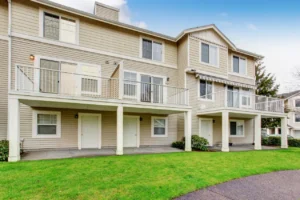
Back in November 2020, we purchased a four-unit property for $1,000,000 with two partners.
At the time, it didn’t look like a perfect deal on paper.
- The cash flow wasn’t strong
- The rents were under market
- The property was under-managed
Most investors would’ve passed.
But here’s the key insight: real estate isn’t just about today’s numbers—it’s about future potential.
Instead of focusing on the current income, we focused on what the property could become.
We made strategic improvements:
- Interior remodeling
- Cosmetic upgrades
- Better property management
- Improved tenant quality
By delivering a better product, we increased both rents and overall value.
The Result: From $200K to $572K
Fast forward to 2026—we sold the property for $1,325,000.
Our initial investment of $200,000 grew to $572,000.
That’s not luck.
That’s:
- Taking calculated risk
- Identifying underperforming assets
- Executing a value-add strategy
This is how wealth is built in multifamily real estate.
The Big Question: Why Sell a Winning Property?
At the time of sale, everything about the property looked great:
- 3.875% interest rate
- Over $4,000/month in cash flow
- Strong tenant base
- Fully stabilized asset
So why sell?
Because the property had already been maximized.
There were no more meaningful “levers” to pull:
- Rents were near market
- Renovations were completed
- Operations were optimized
Get a Free Multifamily Loan Quote
Access Non-Recourse, 10+ Year Fixed, 30-Year Amortization
At that point, the investment becomes what many investors don’t want to admit:
It becomes “lazy money.”
Understanding “Lazy Equity”
Most investors make a critical mistake.
They evaluate their return based on their original investment—not their current equity.
In this case:
- Original investment: $200,000
- Current equity: $572,000
That changes everything.
The real question becomes:
Is your $572,000 working hard enough?
If the answer is no, it may be time to reposition that equity into a better opportunity.
The Strategy: Sell High, Buy Low
One of the most important insights in this deal is timing.
Right now, in many Southern California markets:
- 2–4 unit properties are still trading strong
- Larger apartment buildings (8–10 units+) have softened
This creates a rare window where you can:
- Sell small properties at the top of the market
- Buy larger properties closer to the bottom
That’s exactly what we did.
The Upgrade: Moving Into a 10-Unit Property
Let’s break down the numbers that made this move compelling.
Price Per Square Foot
- Sold 4-unit: $300/sq ft
- Bought 10-unit: $295/sq ft
Already a better deal on a larger asset.
Price Per Unit
- Sold: $475,000 per unit
- Bought: $177,000 per unit
That’s a massive improvement.
Even more important:
- Market average: ~$230,000/unit
- Purchase price: $177,000/unit
We acquired the property at a significant discount.
GRM (Gross Rent Multiplier)
- Sold at: 12.71 GRM
- Bought at: 10.63 GRM
Lower GRM = better for buyers.
Cap Rate
- Sold at: 5.4%
- Bought at: 5.7%
Higher cap rate = stronger return.
Income Comparison
- 4-unit: ~$104,000/year
- 10-unit: ~$170,000/year
Across every major metric, the 10-unit outperformed.
The Trade-Off: More Risk (At First)
This strategy isn’t without downsides.
- Higher interest rates
- Lower initial cash flow
- Unknown tenant base
- Increased operational complexity
But experienced investors understand something important:
You don’t buy for today—you buy for what you can create.
The Real Opportunity: Value-Add Potential
The 10-unit property comes with multiple upside levers:
1. Unit Renovations
Eight units are in original condition.
This creates the opportunity to:
- Renovate kitchens and bathrooms
- Increase rents to market levels
- Improve tenant quality
2. Commercial-to-Residential Conversion
There are two commercial units currently underperforming.
The plan:
- Convert them into residential units
- Significantly increase income
3. Existing Improvements
The seller already upgraded:
- Electrical systems
- Roof
This reduces upfront capital risk.
The Bigger Lesson: Scaling Requires Action
A lot of investors reach a plateau.
They buy a duplex, triplex, or fourplex… and stop.
They become comfortable.
But comfort can limit growth.
If you want to build real wealth in multifamily real estate, you have to continually ask:
- Is this property fully optimized?
- Is my equity working hard enough?
- Are there better opportunities available?
Final Thought: Think Like an Investor, Not an Owner
It’s easy to get emotionally attached to a property—especially one that’s performing well.
But successful investors think differently.
They treat properties as vehicles for capital growth.
In this case, selling a strong, stable fourplex wasn’t a step backward—it was a strategic move forward.
By repositioning equity into a larger asset with more upside, we created the opportunity for even greater long-term returns.
Source: Sage Real Estate









 Accessibility