Many New York Landlords Still Facing Declines in On-Time Rent Payment, Survey Shows

The American Apartment Owners Association hosted its NY Landlord Legal Compliance Update 2025 to 2026 on December 9, offering clarity on the complex set of rental laws shaping the state. This year’s session examined the legal developments landlords navigated throughout 2025 and the major regulatory shifts expected in 2026. As part of the event, attendees participated in a survey that revealed ongoing declines in on time rent payment for a significant portion of owners.
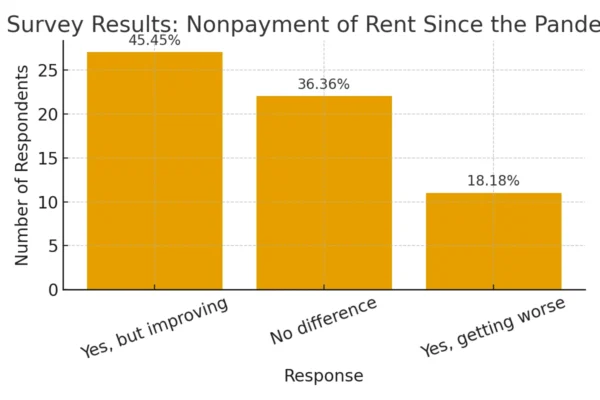
Survey data shows that many New York landlords continue to face payment challenges well after the pandemic. Twenty seven respondents reported that rent nonpayment has improved, but twenty two said they have seen no change, and eleven indicated that conditions have worsened. The mix of responses highlights that despite some signs of stability many landlords still experience late or missing payments at levels that strain operations.
The webinar also addressed the most significant legal changes affecting New York landlords today. Attorneys Justin R. Friedman and Robert Friedman provided a detailed review of updates to the NY Good Cause Eviction Law and the requirements of the NY LLC Transparency Act. They also outlined the lease drafting errors that most often expose landlords to unnecessary legal risk.
A central part of the presentation examined whether New York landlords must accept Section 8 vouchers, a question that remains a source of confusion as enforcement actions increase. Attendees reviewed a major case in which New York landlords were fined twelve point eight million dollars for lead paint violations, illustrating the severe consequences of noncompliance. Another case study focused on the dismissal of eviction actions when landlords failed to serve the Notice of Occupancy Rights under the Violence Against Women Act.
The speakers also prepared landlords for the new eviction procedure rules taking effect in the Buffalo and Erie County Hub Court. These rules are expected to influence filing practices, service requirements, and court scheduling throughout 2026. Landlords were encouraged to closely evaluate their procedures to remain compliant as these changes roll out.
About the Speakers
Attorney Robert Friedman of Friedman and Ranzenhofer, PC has represented landlords for more than forty six years. He is the author of How to Survive Legally as a Landlord and The Upstart Small Business Legal Guide, and he previously served as a real estate law columnist for the Buffalo News and the Buffalo Courier Express. He continues to lecture for AAOA and landlord associations throughout New York.
Attorney Justin R. Friedman leads the Landlord Litigation Department at Friedman and Ranzenhofer, PC and manages eviction actions across Western New York. He frequently lectures for AAOA and advises landlords on compliance strategies in a fast changing legal environment. Together, the Friedmans provided attendees with practical guidance designed to help landlords navigate continuing legal and operational pressures.








 Accessibility