
Las Vegas was the nation's leading destination for prospective movers in the second quarter
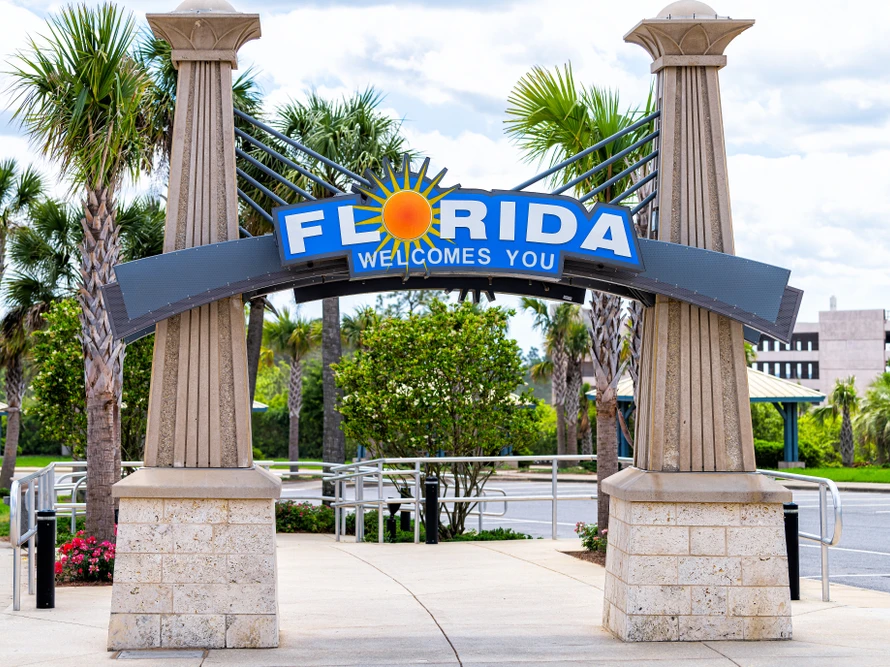
Affordability Pushes Homebuyers Toward Florida And Nevada

Affordability is reshaping where Americans are looking to live and the shift could have meaningful implications for housing demand in markets that stand to gain or lose residents.
A new Redfin analysis of second-quarter 2026 home-search activity shows a growing share of prospective buyers considering moves across metro areas, with lower-cost Sun Belt markets—particularly in Florida and Nevada—drawing the strongest potential inflows.
Nearly one in five house hunters or 18.7%, considered moving to another metro in the second quarter, up from 18.1% a year earlier and the highest share in five years, according to Redfin. While the figures reflect search behavior rather than completed moves, they offer an early indicator of where residential demand may be building and where high housing costs continue to push prospective buyers to look elsewhere.
Florida And Las Vegas Draw Search Demand
Las Vegas was the nation’s leading destination for prospective movers in the second quarter, with a net inflow of 9,581 Redfin users searching for homes there. North Port, Fla., ranked second with a net inflow of 5,873, followed by Orlando at 5,742, Miami at 5,239 and Sacramento at 5,227.
The rest of the top 10 included Cape Coral, Fla.; Tampa, Fla.; Myrtle Beach, S.C.; Spokane, Wash and San Antonio. Spokane was the only market in the top 10 outside the Sun Belt.
For commercial real estate investors, the search patterns point to potential population and household growth in markets already benefiting from migration and lower relative housing costs. Sustained in-migration can support apartment absorption, single-family rental demand, retail spending and demand for services, although Redfin’s findings do not establish that search activity will translate into actual relocations.
Florida led in potential inbound migration, recording a net inflow of 38,922 prospective movers. That was more than the combined net inflows for South Carolina, Arizona and Tennessee, the next three states on the list. Nevada, Idaho, North Carolina, Texas, Maine and Wisconsin rounded out the top 10.
Affordability Drives The Search
Home prices remain a central force behind the movement. Redfin found that buyers considering a move from Los Angeles to Las Vegas could find a typical home for $447,000 in Las Vegas, compared with $922,000 in Los Angeles.
The gap illustrates why high-cost coastal metros continue to lose prospective residents to less expensive markets. The same dynamic is playing out in the Northeast. A typical home in New York City costs $832,000, compared with $309,000 in Philadelphia, according to Redfin.
Those price differences matter not only to prospective homeowners but also to rental markets. High home prices can keep households in rentals longer, while migration into lower-cost markets can broaden the pool of renters, buyers and consumers. Investors will be watching whether the search patterns translate into additional demand for multifamily housing, build-to-rent communities and neighborhood retail in destination metros.
Costly Metros Face Potential Outflows
Los Angeles had the largest potential net outflow of any metro, with 28,652 more Redfin users looking to leave than move in. New York followed with a net outflow of 27,143 prospective movers, followed by Seattle at 24,728, San Jose at 22,353 and Chicago at 18,920.
Washington, D.C.; Boston; Denver; Minneapolis and Detroit completed the top 10 list of metros with the largest potential losses.
At the state level, California posted the largest potential net outflow, at 56,548. New York followed at 29,838, then Illinois at 22,253, Washington at 17,091 and Massachusetts at 10,730. Virginia, Washington, D.C., Colorado, Minnesota and Maryland were also among the 10 locations with the largest potential outflows.
The results underscore the pressure that affordability is placing on expensive metros. For investors in those markets, the trend could heighten the importance of property sectors and locations that serve households priced out of homeownership. At the same time, a sustained loss of residents could eventually weigh on household formation and housing demand if search activity becomes completed moves.
Many Movers Stay Close To Home
Not every prospective move involves crossing the country. Many Redfin users searched for homes in another metro within their own state or in a nearby state, a pattern the company said has been made easier by hybrid and remote work.
Examples included prospective movers searching from Seattle to Portland, OR; Chicago to Milwaukee; Washington, D.C., to Salisbury, Md.; Minneapolis to Chicago; Boston to Portland, Maine and Detroit to Chicago.
That pattern suggests investors should look beyond broad interstate migration narratives. Nearby, more affordable metros may capture demand from larger and more expensive neighboring markets, particularly where households can retain jobs or professional ties through hybrid work arrangements.
Redfin defined a user as a migrant when the person viewed at least 20 for-sale homes in an origin-and-destination metro pair during the relevant month. The company calculated net inflow by comparing the number of Redfin.com users searching to move into a metro with the number searching to leave it.
The data should be read as an indicator of intent rather than a measure of completed moves. Redfin noted that homebuying remains sluggish, meaning the actual number of people relocating is likely still below 2021 and 2022 levels despite the higher share of searchers considering a move. The data may also include users looking for vacation homes or investment properties.
Source: GlobeSt.










 Accessibility